
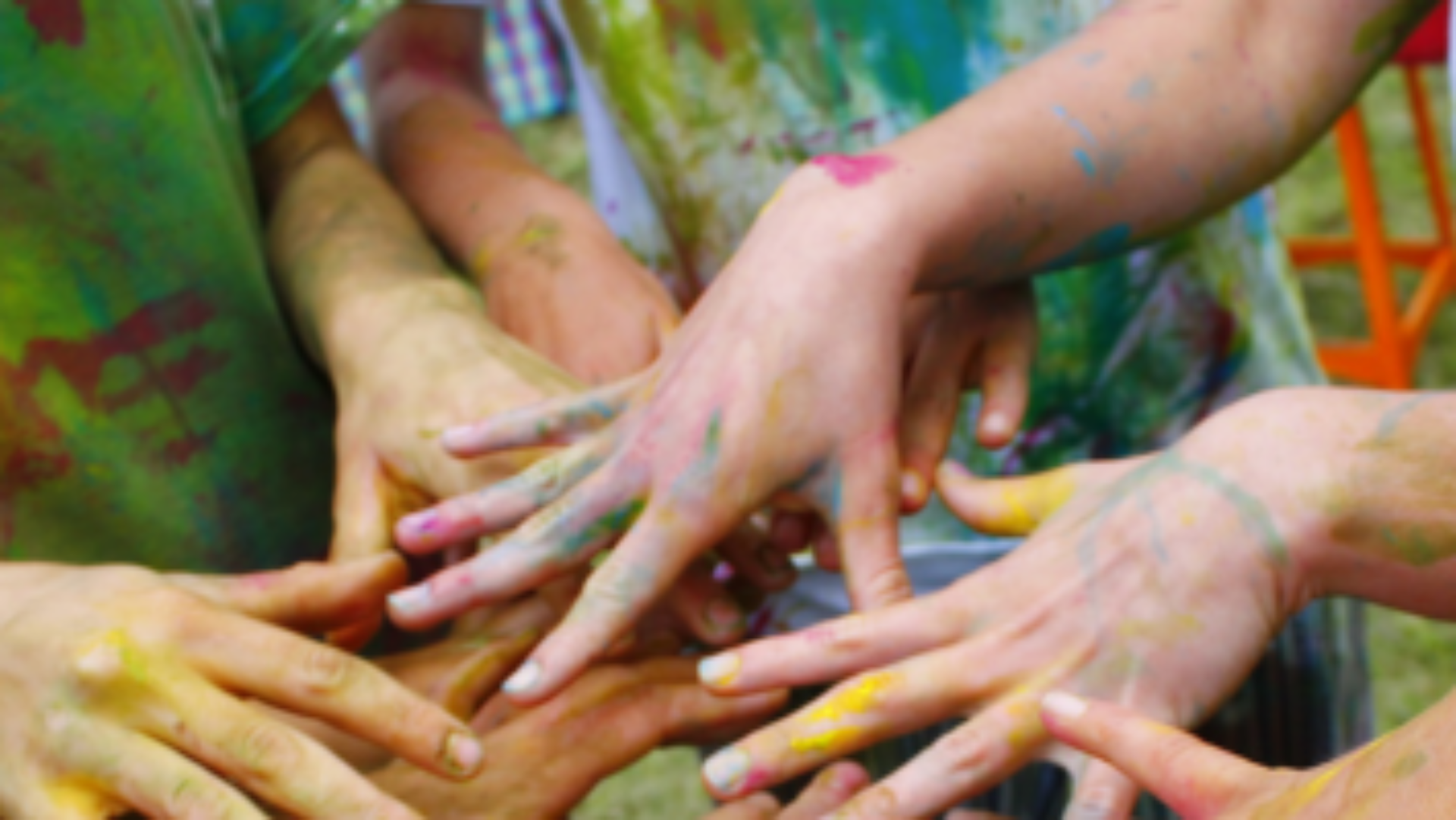

Sensory Play!
The world of young children is centered around exploring their world through play and sensory play is often at the forefront of this exploration. Children learn through touching, smelling, listening, looking, and tasting (even if that material was defiantly not edible). Sensory play can include:
- Playing in a puddle after a rainstorm
- Digging in a muddy garden bed
- Splashing in the tub
- A sensory bin filled with water, paper, dirt or anything messy
- An art experience
- Cooking
Why should I let my child get messy?
As a parent myself, I know all too well the anxiety that can come with children induced messes. “How am I ever going to clean that up? And will that stain ever come out?!” Probably not, but I would argue that the learning that is happening will far outweigh the sadness of that favorite shirt now sporting a mud stain, hopefully. When we allow children to play in a way that invites messes, we are offering them the opportunity to test their own limits and explore cause and effect in the process. They can practice scientific concepts when they get to make the mess, autonomy when they get to pour the water themselves, and they can learn responsibility and natural consequences, when they inevitably are part of the clean-up process.
One of my favorite sensory activities that I placed in my one-year-old classroom was also, hands down the messiest activity I have ever done over six years of teaching. You might be thinking of course I used paint, or Oobleck and just let the children go wild. But would you believe me if I told you, it was paper? Yep! Shreaded paper to be exact. I had this great idea to put shredded paper in my sensory bin with scoops and containers. And don’t get me wrong, it was amazing! The children loved the activity, and it led to some really great learning and exploration. The children were able to practice fine motor skills when they picked up the paper and filled each container. They explored cause and effect when they held the paper as high as they could reach and dropped it to the ground.
However, within twenty minutes of starting the activity, paper was everywhere. By the end of the day my floor was coated with shredded paper and there was a trail of paper leading down the hall and out of the school. At pick up time that day I had a parent look at my classroom and look back at me with amusement and say “I still support your decision… but how do you feel about it?” Honestly, when I thought back at how much the children had loved the paper and just how much learning had happened, I was glad that I let the activity continue throughout the day. I then proceeded to vacuum up as much as I could before writing our custodian a very nice note with an accompanying treat.
I say all that to say this: sometimes the learning that comes when our children make a mess, is worth the extra effort on our part when it comes to the cleanup.
For more reasons why messes are so great for your child’s development check out Why is Sensory Play Important?
But what about the mess?
Messes are inevitable in learning and in childhood, but that does not mean that I expect you to just magically be okay with shredded paper (or paint) covering every inch of your floor. Here are a few of my favorite ways to help mitigate the messes while still offering hands-on sensory activities:
- Use an art smock or an old, oversized T-Shirt
- Place a shower curtain, an old sheet, or a plastic tablecloth on your floor or table
- Take it outside. Almost every messy activity can be done outside, weather permitting
- Use a sensory table. A sensory table can help to contain some of the mess
- Incorporate sensory play into bathtime. Use colored bath soaps and colored water for an easy to wash away sensory activity
- Start with less messy activities such as playdough and work your way up the messy stuff
Here are some of my favorite messy sensory materials!
- How to make Puffy Paint
- Oobleck
- Shaving cream and watercolors
- Shaving cream and paint brushes
- Slime
- Cloud Dough
- Shreaded Paper
- Water and containers
- Playdough